
AI support triage & draft replies
A DTC apparel brand cut median first-response time from fourteen hours to ninety minutes — without adding headcount or losing the human in the loop.
Representative engagement — the figures below model a typical project of this kind, not a named-client audited result.
An inbox that never caught up
Every ticket was triaged and answered by hand. Median first-response time sat around fourteen hours, and during seasonal spikes — when volume ran two to three times higher — it climbed past thirty.
Roughly 40% of agent time went to repetitive, low-complexity tickets — order status, returns policy, address changes — leaving less room for the cases that genuinely needed a person.
Classify, draft, and resolve the easy ones — keep agents on the rest
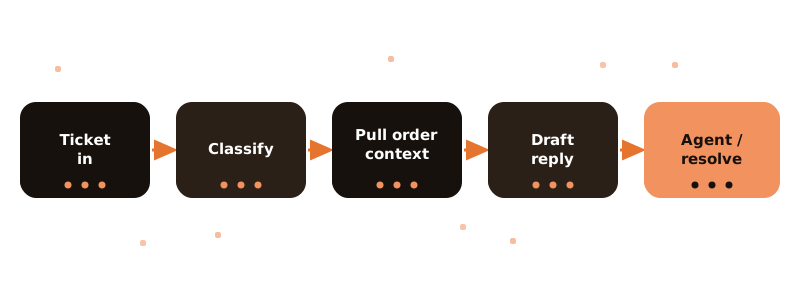
We built a triage pipeline that classifies each incoming ticket by intent and urgency, pulls order and shipping context from the commerce platform and 3PL, and drafts a reply for the agent to approve.
A defined set of low-risk cases is resolved automatically behind a confidence threshold and explicit guardrails. Everything else lands in an agent's queue, pre-drafted. Draft quality is tracked by an evaluation harness, and every override is logged.
- Intent and urgency classification on every ticket
- Order and shipping context pulled from commerce + 3PL systems
- Agent-approved reply drafting with tone control
- Guarded auto-resolution for low-risk ticket types
What changed, by the numbers.
Faster answers, steadier tone, same team
First responses now land in about ninety minutes, and peak season no longer means a collapsing inbox. Agents handle more than twice the volume per day because they approve and adjust drafts instead of writing every reply from scratch — and the brand's tone stays consistent across the whole queue.